

Technical Overview
Engineered timber flooring is one of Melbourne’s most advanced flooring solutions—built for stability, performance and long-term resilience. But the big technical question remains: Can engineered flooring be sanded?
The answer is yes, but only under specific structural conditions. Sandability depends on the thickness of the wear layer, the construction quality, and how the flooring was originally installed. In this in-depth technical guide, Dex Flooring breaks down the science behind sanding Engineered Timber floors, the factors that determine refinishing potential, and the correct Melbourne-standard process used by professionals.
The Science Behind Engineered Floor Sandability
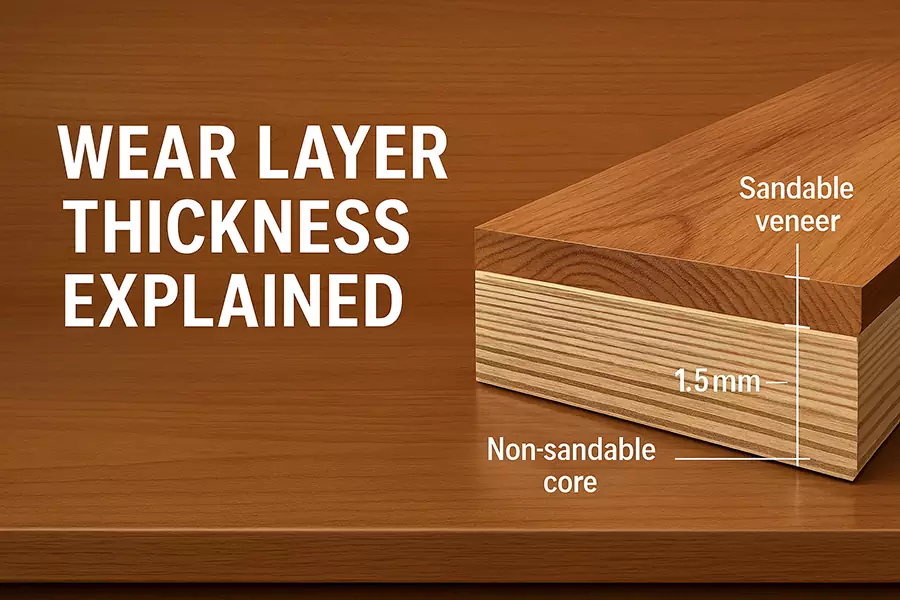
Engineered timber flooring is made from multiple layers fused together: a solid timber wear layer, a strong plywood/HDF core, and a stabilising backing layer. The structural make-up is designed for dimensional stability—but the top veneer determines whether sanding is possible.
Why the Wear Layer Matters
Sanding removes a thin portion of the surface. If the veneer is too thin, sanding risks cutting through the top layer and exposing the core.
Typical veneer thicknesses in Melbourne include:
- 0.6mm–1.5mm: Cannot be sanded
- 2mm–3mm: Can be lightly sanded once
- 3mm–4mm: Suitable for 1–2 sandings
- 5mm–6mm: Suitable for multiple refinishes
Higher-quality engineered floors—especially European Oak—often fall within the 3–6mm range.

Bring Style & Durability to Your Floors
Discover modern flooring that perfectly matches your lifestyle
Our experts at Dex Flooring Nunawading are ready to help you choose your dream floor
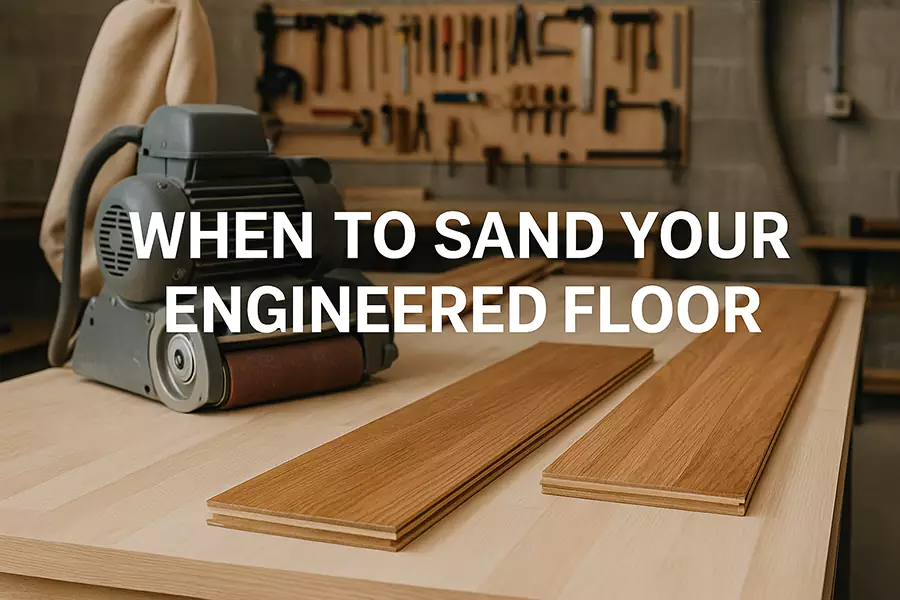
Can You Sand Engineered Wood Flooring?
Yes, you can sand engineered wood flooring as long as the wear layer is thick enough to withstand sanding pressure. This process is commonly performed across Melbourne homes to restore ageing floors.
Sanding helps eliminate:
- Surface scratches
- UV fading
- Minor dents
- Wear patches in high-traffic zones
- Old coating or surface treatments
Can Engineered Flooring Be Sanded and Refinished?
Yes. After sanding, engineered floors can be fully refinished. The refinishing stage is a crucial part of long-term maintenance—especially for floors exposed to Melbourne’s varied humidity levels.
Refinishing includes:
- Surface sanding with fine abrasives
- Dust extraction using industrial vacuums
- Application of coating (water-based polyurethane, hardwax oils, matte/satin finishes)
Professional refinishing can significantly extend the lifespan of engineered floors.
Can Engineered Flooring Be Refinished Multiple Times?
This depends on the original veneer thickness and the quality of previous sanding work.
A general guide:
- 2mm veneer: 1 refinishing
- 3–4mm veneer: Up to 2 refinishes
- 5–6mm veneer: Up to 3 refinishes
Floors that were sanded aggressively in the past may have reduced refinishing potential.
Engineering Factors That Determine Sandability
-
Type of Timber Veneer
European Oak veneers respond exceptionally well to sanding due to their consistent grain and density.
-
Bonding and Core Strength
Strong bonding between layers ensures the floor remains stable during sanding vibrations.
-
Installation Method
Glued-down engineered boards generally offer better results than floating floors in technical refinishing processes.
-
Moisture and Climate Exposure
Melbourne’s humidity fluctuations can cause surface stress—proper acclimation before installation extends sanding potential.
How Often Can Engineered Flooring Be Sanded?
Based on Melbourne’s usage patterns, engineered floors are typically sanded every 10–12 years, depending on:
- Traffic density
- Window exposure
- Pets and furniture movement
- Previous finishes
Comparison: Engineered Timber vs Solid Timber Sanding Potential
| Feature | Engineered Timber | Solid Timber |
| Sandability | Limited • 1–3 times | Multiple times |
| Stability | High dimensional stability | Moderate |
| Moisture Response | Better performance | More movement |
| Ideal Conditions | Melbourne’s varied climate | Controlled environments |
Engineered flooring offers impressive performance in homes and commercial properties where long-term structural stability is essential.
Technical Signs That Your Engineered Floor Needs Sanding
Look out for:
- Worn patches in hallways
- Dull or faded coatings
- Surface-level scratches
- Uneven sheen
- Light water staining
If the core remains intact and the veneer thickness is sufficient, sanding is a viable restoration method.
Technical Sanding Process Used in Melbourne
The Dex Flooring technical approach includes:
- Veneer thickness inspection using calipers
- Checking bond integrity
- Gentle multi-pass sanding with high-grit abrasives
- HEPA dust removal
- Finishing with industry-grade coatings
This method maximises surface restoration while preserving as much veneer as possible.
Pros and Cons of Sanding Engineered Timber Flooring
Advantages
- Restores surface to near-new condition
- Removes scratches and fading
- Allows finish or colour changes
- Extends floor life
Limitations
- Veneer limits number of sandings
- DIY sanding risks veneer damage
- Deep damage may require board replacement
Alternatives if Your Engineered Floor Cannot Be Sanded
If the veneer is too thin:
- Light buffing and recoating
- Spot repairs
- Board replacement in specific areas
- Surface re-oiling depending on finish type


FAQ — Sanding Engineered Flooring (Melbourne Technical Insights)
Q1: Does every engineered floor allow sanding?
No. The veneer must be thick enough.
Q2: How do professionals check sandability?
They measure veneer thickness and inspect bonding strength.
Q3: Can sanding improve water-damaged engineered floors?
Only if damage is superficial and veneer remains intact.
Q4: Does sanding create dust?
Professional sanding uses low-dust extraction systems.
Q5: How long does the technical refinishing process take?
Usually 1–3 days depending on coating.
Restore the Performance of Your Engineered Floors with Dex Flooring
Engineered flooring is designed for long-term durability—and sanding is one of the most effective technical methods for restoring its appearance and performance. Whether your floors have worn patches, fading, or scratches, a precision refinishing process can bring them back to life.
Ready to improve the lifespan of your engineered timber floors? Dex Flooring offers guidance to help households make informed technical decisions for a long-lasting result.